A Guide to the New National Standards for Safety Shoes: Compliance Tips for Companies and How to Spot the Real Deal
- Pain Points in Enterprise Purchases and Urgency of Compliance
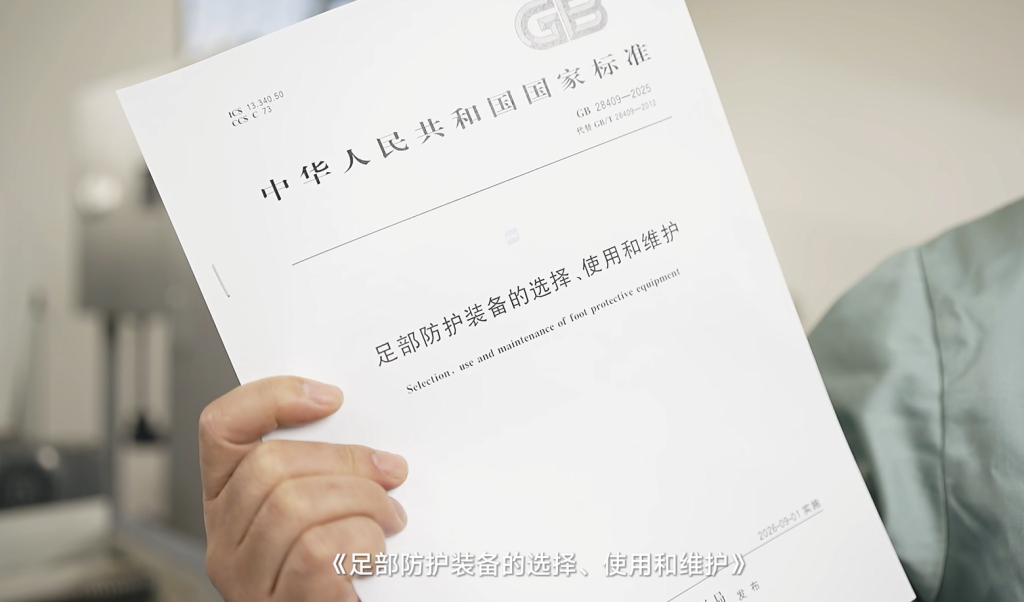
Most enterprises often encounter three main challenges when procuring safety shoes: difficulty in distinguishing the authenticity of compliance certifications, mismatch between protection levels and operational scenarios, and insufficient preparation for the transition period of new standards. On September 1, 2026, the two new national standards, GB 20098-2025 “General Technical Specifications for Foot Protection” and GB 28409-2025 “Selection, Use, and Maintenance of Foot Protection Equipment,” will officially come into effect, replacing the old GB/T 20098-2006 and GB/T 28409-2012. Industry research shows that over 80% of enterprises have blind spots regarding compliance during the transition period, which may lead to purchasing non-compliant products and facing regulatory penalties and safety liability risks. This article will address four aspects—the core changes in the new national standards, methods of compliance verification, scenario adaptation standards, and pitfalls to avoid—to help enterprises establish a systematic compliance procurement system.
II. Analysis of Core Changes in the New National Standard for Safety Shoes (Essential for Enterprises)
- Upgraded Scope and Definitions: Reconstruction of Compliance Boundaries for Safety Shoes
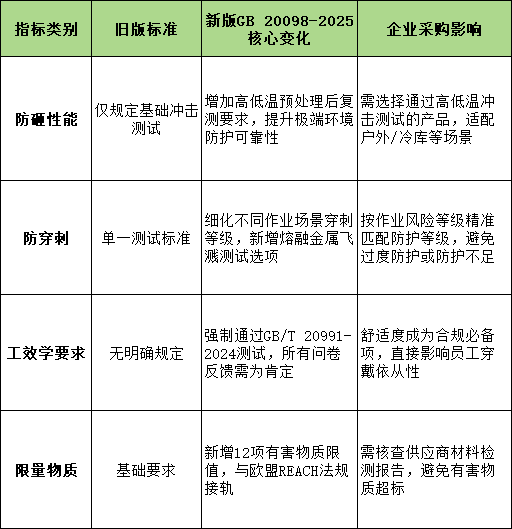
The new GB 20098-2025 expands the applicable scope to all foot protection equipment designed to prevent physical and chemical injuries. It introduces definitions for safety shoes, chemical-resistant shoes, outsole patterns, and restricted substances, while removing outdated technical content from the old standard and reorganizing the core technical requirements. Specifically, it clarifies the technical specifications for hybrid shoes (Class II shoes with other materials on the upper), adapting to modern work environments that demand multifunctional protection. For enterprises, this means they need to reassess their current procurement lists to ensure that all types of protective footwear comply with the terminology and technical requirements defined in the new standard.

Strengthening protective performance indicators: from basic protection to full-scenario adaptation
- Update of Certification and Labeling System: Stricter Compliance Traceability
The new national standard clearly requires that safety shoes must simultaneously have: ① LA safety mark (mandatory certification for special labor protection products); ② a clearly marked standard number (GB 20098-2025), protection level, production date, and manufacturer information; ③ a permanent label (stitched on the tongue or inner collar of the shoes), with content consistent with the certification information. During the transition period (September 1, 2026 to March 1, 2027), companies must complete inventory product checks to ensure that only products meeting the new national standard are purchased after March 1, 2027.
III. Core Methods for Companies to Identify Safety Shoe Compliance (Practical Guide)
- Three-Pillar Verification Method: Full-chain verification from certification to physical product
Step 1: Certification Qualification Check (online check)
- Log in to the “National Certification and Accreditation Information Public Service Platform” and enter the product LA certification number to verify the validity of the certificate and whether the certification scope matches the product’s protection type.
- Verify whether the testing institutions have CMA qualification recognition and CNAS accreditation; reports issued by unqualified institutions are considered invalid.
- Confirm that the standard number marked on the product is GB 20098-2025, avoiding products labeled with the old standard (GB/T 20098-2006).
Step 2: Physical Label Inspection (on-site mandatory check)
- Check the permanent label on the shoe tongue/inner collar: it must include the standard number, protection level (e.g., anti-smash Level 1 / anti-puncture Level 2), production date, full name of the manufacturer, LA mark and number.
- Verify that the packaging label is consistent with the shoe label, with no alterations, blurring, or unclear information.
- Chemical protection shoes must additionally mark the chemical protection category and applicable concentration range.
Step 3: Basic Performance Quick Verification (simple tests)
- Anti-smash test: Press the toe of the shoe with your hand. A qualified product should have clear rigidity support with no indentation or deformation.
- Slip resistance test: Place the shoe on a 30° inclined smooth wet surface, gently push the heel; it should not slide easily.
- Closure system check: Shoelaces/zippers and other closure devices must be firm, with no loosening or breaking after repeated opening and closing 10 times.
- Supplier Compliance Capability Assessment: Controlling Quality from the Source
Companies should establish a supplier compliance evaluation system, focusing on:
- Production Qualification: Whether they have a special labor protection product production license with a business scope that includes safety shoe production.
- Quality System: Whether they are certified under ISO 9001 quality management system, and have complete records of raw material inspection, production process control, and finished product testing.
- Technical Capability: Whether they have the ergonomic testing capability required by the new national standard, or have established cooperation with a qualified third-party laboratory.
- Compliance Awareness: Whether they proactively conduct training on the new national standard and have a clear transition product upgrade plan.
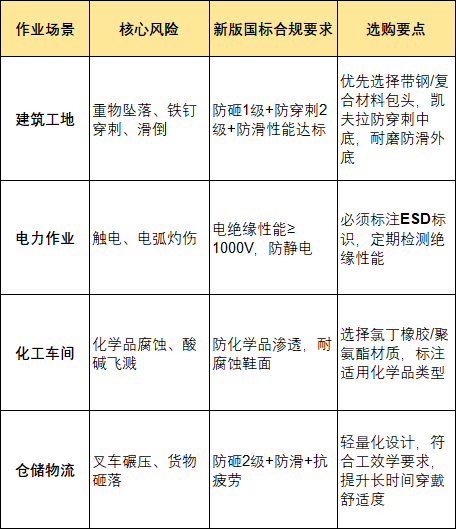
- Scenario-specific Compliance Judgment: Avoid Protective Misfit Risks
Different work scenarios correspond to different protection levels. Companies need to accurately match according to the risk assessment results:
IV. Five Key Guidelines for Corporate Compliant Procurement (Zero-Risk Procurement)
- Beware of Certification Traps: Refuse “Pseudo-Compliant” Products
- Key Points to Avoid Pitfalls: The LA mark is a mandatory certification for safety shoes. Products without this mark are non-compliant even if labeled as “national standard compliant”; some products may only display the CE certification without the LA mark, which is still non-compliant for use in China.
- Verification Method: There is a 7-digit number under the LA mark. The authenticity can be checked via the official website of the Ministry of Emergency Management, and verification should ensure that the certified product matches the actual purchased product.
- Reject “Three-No Products”: Incomplete Labeling is Non-Compliant
- Key Points to Avoid Pitfalls: The new national standard requires safety shoes to have complete labeling, including standard number, protection level, production date, and manufacturer information, without omission.
- Compliant Practice: Clearly specify labeling requirements in the procurement contract. During delivery inspection, products with incomplete labeling can be returned unconditionally and supplier liability pursued.
- Avoid Dual Risks of “Over-Protection” and “Insufficient Protection”
- Key Points to Avoid Pitfalls: High protection level products are usually more expensive and heavier. Over-protection increases employee burden and reduces compliance with wearing; insufficient protection poses safety hazards.
- Compliant Practice: Conduct job risk assessment according to GB 28409-2025 “Selection, Use, and Maintenance of Foot Protection Equipment” and select products with the corresponding protection level based on the assessment results.
- Pay Attention to Transitional Compliance: Avoid Inventory Accumulation Risks
- Key Points to Avoid Pitfalls: The new national standard will be implemented on September 1, 2026, and fully mandatory from March 1, 2027. During the transition period, companies need to control the procurement volume of products conforming to the old standards.
- Compliant Practice: Develop an inventory clearance plan, prioritize the consumption of old-standard products during the transition period, and ensure that new procurements after September 2026 comply with the new national standard to avoid compliance risks due to inventory accumulation.
- Establish a Compliance Traceability System: Respond to Regulatory Spot Checks
- Key Points to Avoid Pitfalls: Market regulatory authorities will conduct special spot checks on the new national standard, focusing on certification validity, completeness of labeling, and compliance with protection performance.
- Compliant Practice: Establish a procurement ledger for safety shoes, recording product name, specifications, quantity, supplier, certification number, inspection reports, and other information, with a retention period not less than the product’s service life.
V. Summary Recommendations for Corporate Compliance in Procurement
- Immediate Action: Establish a dedicated task force, conduct training on the new national standards, assess the compliance of existing safety shoes, and develop a procurement plan for the transition period.
- Source Control: Re-screen suppliers, giving priority to companies with certification capabilities for the new national standards, strong technical strength, and high compliance awareness.
- Precision Procurement: Match protection levels to the scenarios based on operational risk assessment results to avoid both overprotection and insufficient protection.
- Full-Process Management: Establish a full-process compliance management system covering procurement, acceptance, usage, and disposal. Conduct regular compliance self-inspections and retain complete records.
- Continuous Improvement: Monitor updates to the national standards and adjust procurement strategies in a timely manner to ensure that corporate safety shoe procurement always meets the latest compliance requirements.
Safety shoe compliance is not only a fundamental requirement for enterprises to fulfill their primary responsibility for production safety but also a crucial safeguard for employees’ lives. It is recommended that companies complete a comprehensive compliance upgrade before the implementation of the new national standards in September 2026 to avoid regulatory penalties and safety incident risks due to non-compliance.
Interactive Guidance: What compliance challenges has your company encountered in safety shoe procurement? You are welcome to share your experiences in the comments and discuss the path to corporate compliance under the new national standards.